Article
CRM vs. a Managed Sales System: Recording vs. Managing
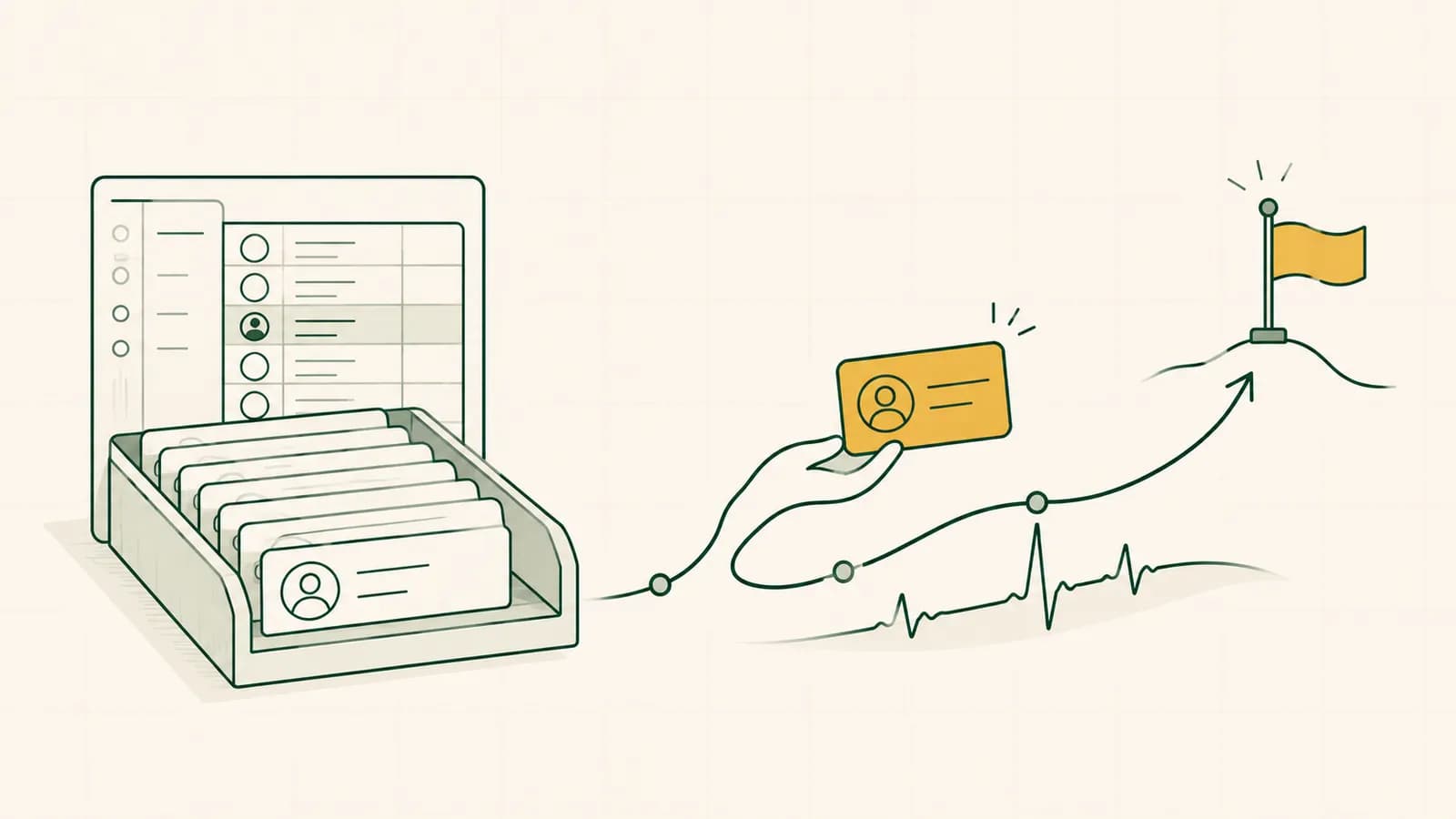
A CRM records customers and waits for you to update it. A managed AI sales system manages what happens next, it answers, follows up and drives to the close. The difference between recording a sale and managing one.
CRM vs. a Managed Sales System: Recording vs. Managing
Almost every business that sells through conversations reaches, at some point, the question "which CRM system should we choose". It is a good question, but sometimes it is the wrong one. Because even the best CRM in the world solves one problem (order and records) and leaves another wide open (who actually manages the sale). In this article we separate two things that are easy to confuse: a system that records your sales, and a system that manages them.
What a CRM does, and why every business needs one
Let's start fair: a CRM is an important tool. It keeps customers in one place, records the history, lets you tag statuses and see the pipeline. Instead of details scattered across a spreadsheet, lists and a rep's head, there is one orderly database. Every business that sells through conversations should have records like that. The value of order is not in dispute.
The gap: a CRM records, it does not manage
The trouble starts when you expect the CRM to do more than it was built for. Because a CRM is, at its core, passive. It waits for someone to update it. It does not answer the customer who wrote at ten at night. It does not send the third follow-up that got forgotten. It does not notice the deal is stuck and does not push it forward. It logs what happened, after it already happened.
And that is exactly where leads leak. The CRM record is tidy and up to date, but nobody answered in time, and nobody followed up. We covered the phenomenon in depth in lead leakage: the problem is almost never a lack of records, it is a lack of management.
Recording vs. managing
This is the heart of the distinction, and it can be said simply: not a CRM that waits for you to update it, a system that manages what happens next. The difference is between recording a sale and managing one.
One contrast captures it all: in a CRM, every customer has a status, a label like "new" or "in progress". In a managed AI sales system, every customer has a state, the live picture of what was said, what the customer is waiting for, and where the deal is stuck. A status is a static tag; a state is something the system acts on. The agent answers immediately, manages the conversation, does the follow-up, and moves the customer forward, instead of waiting for a field to get updated.
In short: CRMs record. A managed sales system manages the path to close.
You do not need to replace your existing CRM
This deserves saying explicitly, because it is a natural objection: management does not mean throwing out the CRM. If you have a customized system you do not want to leave, a managed sales system can sit above it as the conversation and channel management layer, and leave the CRM in place. It is a question of deployment flexibility, not a precondition. The point is not "which tool wins", but which layer is missing: the layer that manages what happens next.
Where it comes together
Who actually closes in the end? Here is the system's honest split: about 10-20% of deals close autonomously end to end, and about 80-90% reach the human rep ready to close, with the full context, not a dry record. The CRM keeps holding the records; the managed system adds what was missing above it, the actual management. The two do not compete; one records, the other manages.
Frequently asked questions
What's the difference between a CRM and a managed sales system? A CRM records: it stores customers, statuses and details and waits for you to update it. A managed AI sales system manages what happens next, it answers immediately, follows up, and moves the customer to the close. The CRM tells you where things stand; the managed system moves them forward.
Isn't a CRM enough to manage sales? A CRM is excellent for records and order, but it is passive, it doesn't answer the customer and doesn't do the follow-up for you. If your sales run through conversations and follow-ups, you need a layer that actually manages the sequence, not one that only logs it.
Do I need to replace my existing CRM? Not necessarily. A managed sales system can also sit as the conversation and channel management layer on top of an existing CRM, without replacing it. That's a deployment-flexibility decision, not a precondition.
What does "every customer has a state, not just a status" mean? A status is a CRM label ("new", "in progress"). A state is the live picture: what was said in the last conversation, what the customer is waiting for, and where the deal is stuck. A managed system holds the state and acts on it, it doesn't just tag a status.
If your CRM is full of customers but the sales still don't feel managed.