Article
Lead management system: from tracking leads to the close
A lead management system shouldn't just record leads, it should manage them: immediate replies, qualification, automatic follow-up, progress to close.
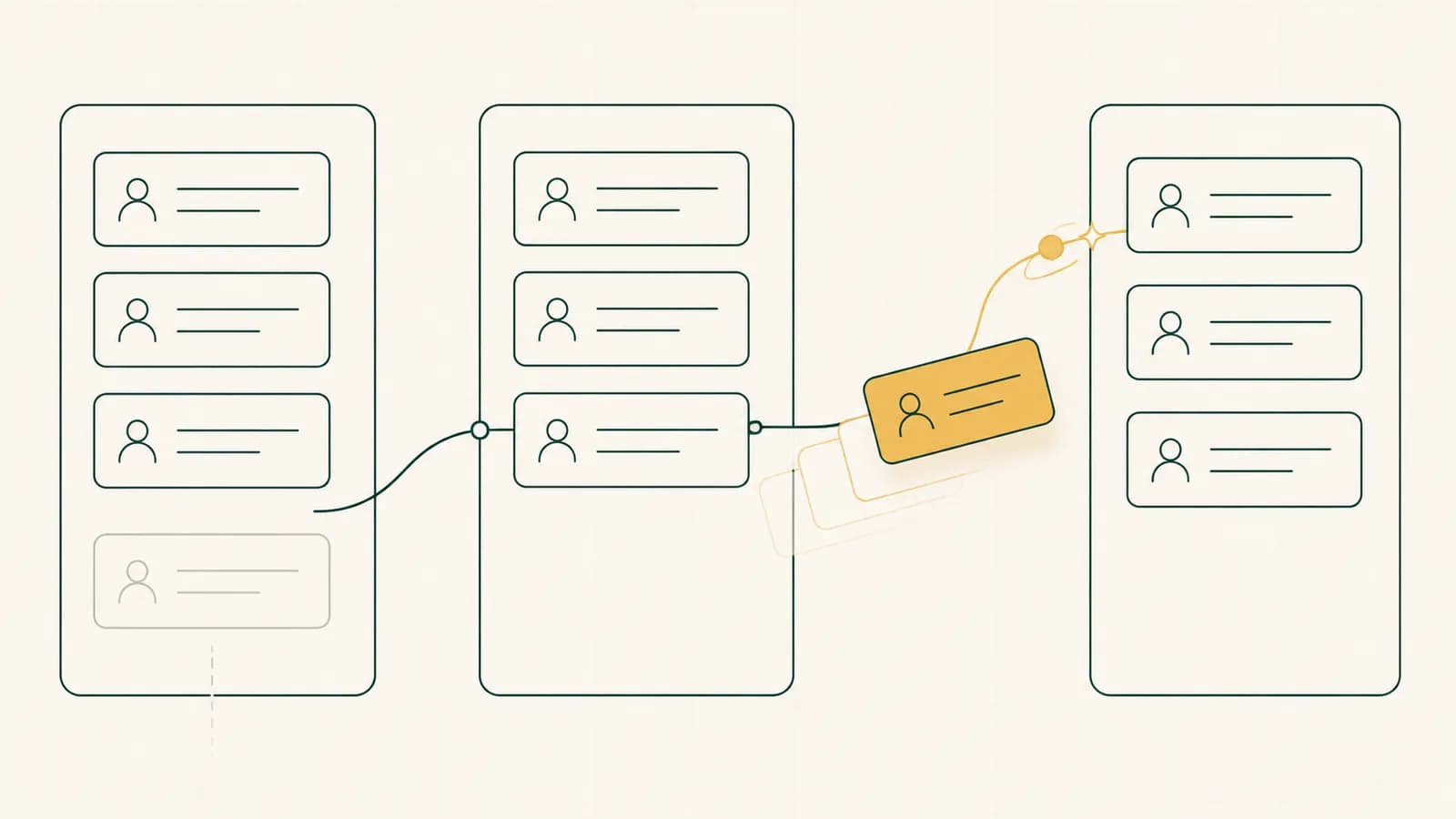
Anyone searching for a lead management system has already understood one thing: a spreadsheet or sticky notes won't do. But most of what gets called a "lead management system" is really a lead tracking system, a place to log an inquiry, tag a status, and see a list. That's better than nothing, but it's also where most leads fall. Because tracking is not managing. In this article we'll show the difference, and why it's worth money.
What a standard lead management system does
A standard lead tracking system does three things: it captures a lead, stores its details, and lets you update a status, "new", "in progress", "not relevant". It gives you a tidy picture. But it's passive: it waits for someone, a rep, the business owner, to do the real work. To answer. To remember to get back. To follow up. To move things forward.
And that's exactly where the leak lives. The lead exists in the system, neatly tagged, but no one answered it in time, or forgot to get back to it, or the third follow-up never happened. The record is tidy; the deal is lost.
Tracking is not managing
This is the essential difference, and it fits in one sentence: a tracking system tells you where the lead stands; a management system moves the lead forward. We've covered exactly where leads leak and why in the article on lead leakage, the short version is that the problem is almost never the volume of inquiries, but how they're managed. And response speed is the first factor: what happens in the first minutes after a lead comes in decides a large share of the outcome.
A system that only records solves neither. It doesn't answer fast, and it doesn't manage what comes next. It waits.
What a system that manages leads looks like
A lead management system that truly manages is built around an AI agent that takes initiative on every lead:
- An immediate reply, to every inquiry, at any hour, before the lead cools off or turns to a competitor.
- Qualification in conversation, who's serious, what they need, what's in the way.
- Automatic follow-up, scheduled, consistent, at the right time; not dependent on anyone's memory.
- Progress until ready to close, the agent holds the sequence until the lead is ripe, then hands it over with full context.
That's the difference between a list you look at and a system that works for you. The same lead volume, a different outcome, because no lead slips away along the path.
From lead to ready-to-close
What happens at the end? Here comes the system's honest split: about 10-20% of deals close autonomously end to end, and about 80-90% reach the human rep ready to close, not from zero. The rep doesn't get a raw list of leads to work through; they get leads that were already answered immediately, qualified, followed up, and ripened to the point where a human is needed. That's the difference between a rep who burns the morning on unripe leads and a rep whose every conversation is worth the time.
A real lead management system doesn't just store your leads, it makes sure they close.
Frequently asked questions
What's the difference between a lead management system and one that only records leads? A system that records stores details and a status and waits for you to update it. A system that manages takes initiative: it replies to the lead immediately, qualifies the need, follows up and moves the lead forward until it's ready to close. The difference is between a record in a database and a process that advances on its own.
How do you raise lead conversion without bringing in more leads? By managing your existing leads better: an immediate reply to every inquiry, follow-up that never gets forgotten, and consistent progress toward a decision. Most leads aren't lost, they simply weren't managed. Closing the leak lifts conversion from the same volume of inquiries.
Does a lead management system fit a small business too? Yes. Precisely in a small business, where there's no full team for tracking, automatic lead management is the difference between inquiries that slip away and a process that moves. The agent holds the sequence even when no one is free to answer.
What happens to a lead that doesn't close right away? It doesn't fall. The system remembers it, comes back at the right time with a scheduled follow-up, and keeps moving it forward, over days and weeks if needed. A lead that's deliberating is a lead that needs managing, not a lost lead.
If you have enough inquiries but not enough control over what happens to each one.