Article
Marketing automation for business: from lead to close
Marketing automation usually stops at the lead: signup, email, drip. How to extend it into the conversation and the close, not just the form.
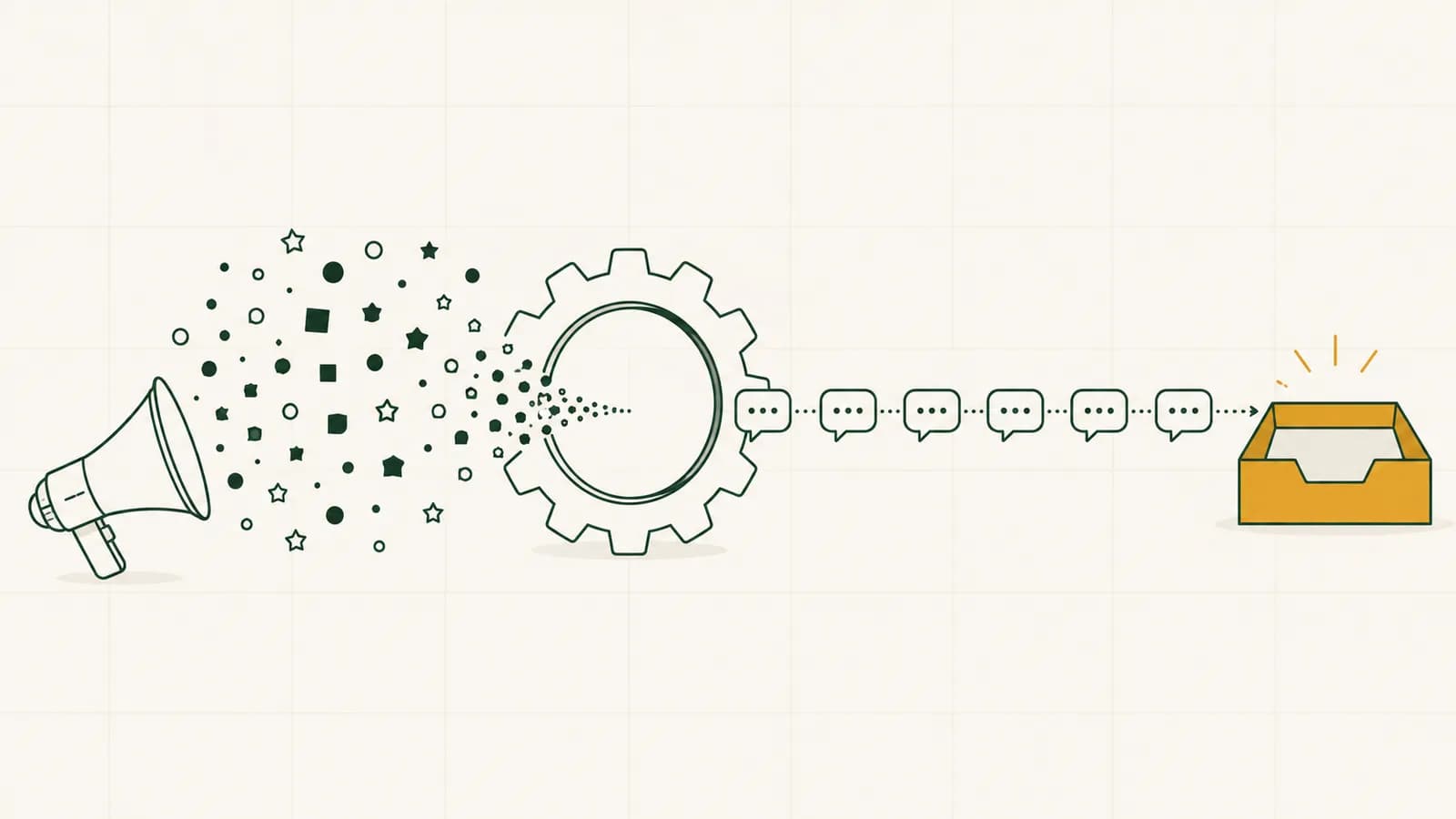
Marketing automation has become the default in recent years: a landing form, an automated email sequence, drip, retargeting. All of it works, it brings in leads and nurtures them cheaply and at scale. But look closely at most marketing automation setups and you'll find they share one clear finish line: the lead. The moment a lead is created, the automation stops, and everything moves to human hands. In this article we'll show why that's a waste, and what happens when you extend the automation beyond the form.
What marketing automation does well
Let's start fair: marketing automation does part of the job excellently. It distributes content at the right times, sends tailored email sequences, spots who opened and who clicked, and brings visitors back through retargeting. These are repetitive, data-driven tasks that a machine does better than a person. At the stage of generating demand and nurturing awareness, marketing automation is a real asset.
Where it stops: the lead is not the end
The problem starts the moment the lead turns from "an email address" into "a person who wants to talk". Because that's when selling begins, and that's exactly where most marketing automation gives up. Someone has to answer immediately, qualify the need, handle an objection, follow up, and move things toward a decision. When that lands on an overloaded human rep, a large share of the expensive leads the automation produced simply cool off and slip away.
In other words: you invested in bringing the lead to the door, then left them waiting outside.
Extending automation into the conversation and the close
The logical next step is to continue the automation into the conversation itself. A managed AI sales system does exactly that: instead of the automation stopping at the lead, an AI agent picks up from that point, replies immediately, runs the sales conversation by context, handles objections, does the follow-ups, and moves the lead until it's ready to close. The automation doesn't end at the form; it continues to checkout.
It's a natural extension of the same principle. If you've already automated lead generation and nurturing, why should the most valuable part, the conversation that closes, stay manual and inconsistent? We've expanded on this logic, what's worth automating in a business and what isn't, in sales automation.
Marketing automation vs. a managed sales system
It's worth being precise about the division, because it isn't a competition but a sequence:
- Marketing automation = generates and nurtures demand. Output: a lead.
- A managed sales system = manages the lead to the close. Output: a deal (or a lead handed to a rep ready to close).
They complement each other. One fills the top of the funnel; the other makes sure it doesn't leak at the bottom. A business running only the first pays for leads that drop off; a business that connects both closes more from the same budget.
What stays human
Extending the automation doesn't mean "no people". The opposite. In a managed system, about 10-20% of deals close autonomously end to end, and about 80-90% reach the human rep ready to close. The automation holds what must be consistent, availability, immediate replies, follow-up, record-keeping, and the human steps in where trust and judgment are needed. Exactly where that boundary runs, we've covered in AI agent vs. sales rep.
Frequently asked questions
What's the difference between marketing automation and sales automation? Marketing automation generates and nurtures leads, forms, email sequences, drip, retargeting. Sales automation manages what happens after the lead comes in: the conversation, qualification, follow-up and progress to the close. The first brings the lead to the door; the second brings them inside.
Can marketing automation close a deal, or only bring in a lead? Classic marketing automation stops at the lead, it doesn't run a sales conversation. To close, you need another layer: an AI agent that manages the conversation, handles objections and moves the lead until it's ready to close. Then the automation continues from the form to checkout, not just to the signup.
What should you automate in marketing and what should stay human? Automate what repeats and must be consistent: distribution, drip, immediate replies, follow-up and record-keeping. Keep for the human what takes judgment, trust and complex closing. That boundary is exactly what a managed sales system is built around.
Does marketing automation fit a business that sells through conversations? Yes, but it isn't enough on its own. A business that sells through conversations needs the automation to continue into the conversation itself, not just deliver the lead, but manage it to the close. That's where the line runs between marketing automation and a managed sales system.
If you're already bringing in leads but feel they drop off after the form.