Article
Smart Appointment Scheduling: From Booking to Payment
An appointment scheduling system that closes, not just books: immediate reply, need discovery, payment in the conversation, then the slot. Fewer no-shows.
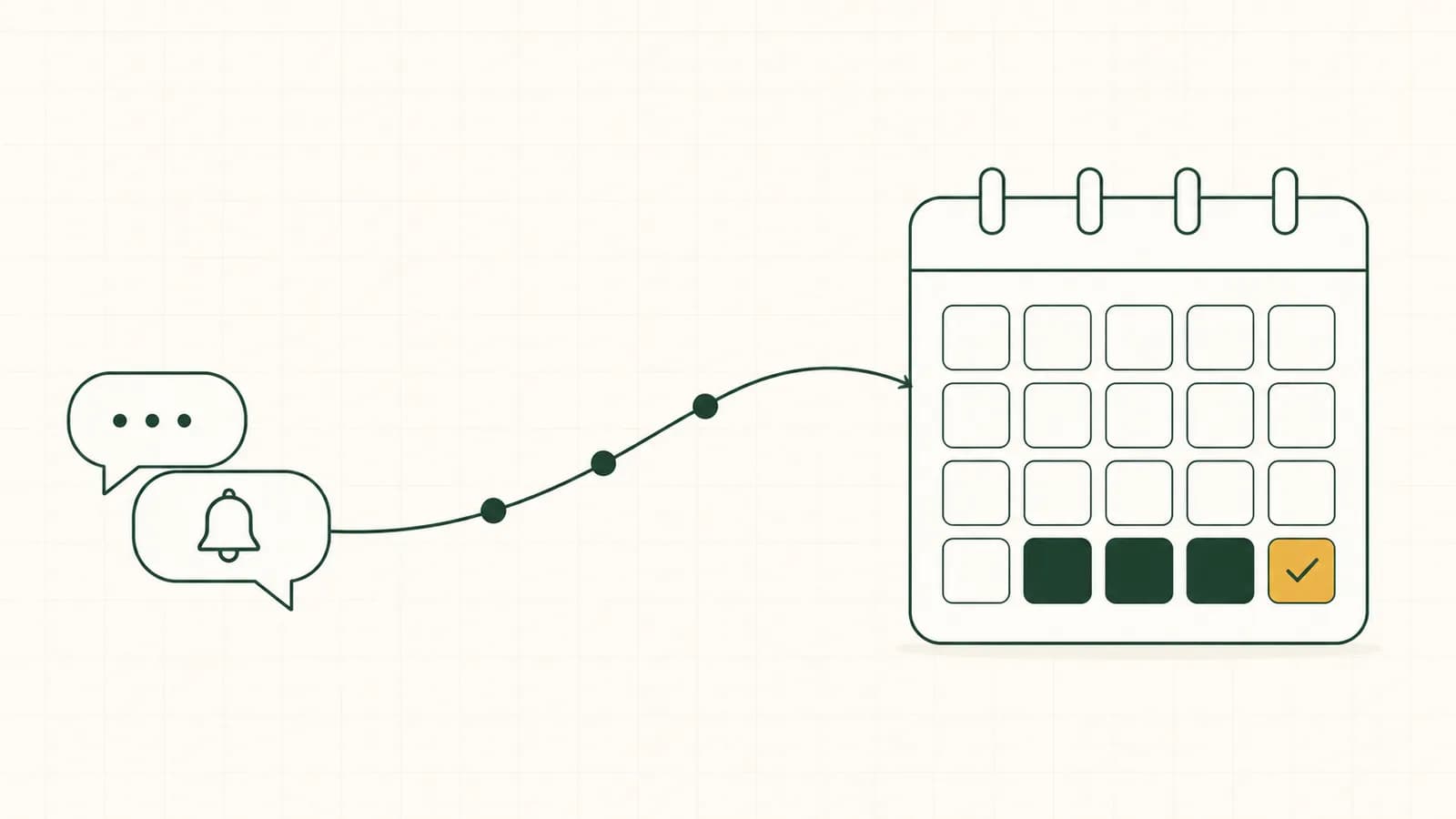
Whoever searches for an appointment scheduling system is usually after one thing: a calendar you can share, where customers pick a time without phone tag. That is useful, but it is also where most systems stop. They book an appointment. They do not close a treatment, do not reduce cancellations, and do not answer the customer who writes at ten at night. In this article we look at what an appointment scheduling system really needs to do in a business that lives on appointments, and where the line runs between coordination and management.
What a regular scheduling system does, and where it stops
A standard appointment scheduling system does three things: shows availability, lets people pick a time, and sends a reminder. In many businesses that is enough. But in a clinic, a practice or a service business where every appointment is worth real money, those three leave out the critical part, what happens before the slot is booked, and what happens when the appointment never materializes.
Because a customer's first message is almost never "I want Tuesday at 4". It is "this hurts, is it right for me?", "how much does it cost?", "I'm not sure". That is not a booking request, it is the start of a sales conversation. A system that only shows a calendar waits for the customer to walk the whole path to a decision alone. A large share of customers simply never reach the bottom line.
The real problem: cancellations, no-shows and after-hours inquiries
Three recurring leaks in every business that runs a calendar:
- Inquiries after business hours. A customer writes in the evening or on the weekend, when the pain or the motivation peaks. Without an immediate reply, by morning they have already gone to a competitor.
- No-shows. An appointment booked on an open calendar, with no commitment, is too easy to cancel or simply skip. Every such gap is a lost hour.
- Last-minute cancellations. With no early commitment, the calendar looks full but empties out in practice.
An appointment scheduling system that amounts to an SMS reminder solves none of the three. It reminds, it does not manage.
From scheduling to managing: an agent that closes, not just books
This is where a managed AI sales system comes in. Instead of a tool that shows a calendar, an AI agent manages the whole path to the appointment:
- An immediate reply at any hour, to every inquiry, at 22:30 and on Saturday alike.
- Need discovery, what is bothering them, what they have tried, what fits.
- Objection handling, price, skepticism, "will this help me?".
- Automatic follow-up for whoever needs another moment to decide.
The agent is calibrated deeply to your field, the treatment types, the recurring questions, the real objections, so it manages the conversation rather than just answering it. The inquiry that was "I'm not sure" becomes a decision, instead of hanging in the air until the customer forgets.
Flipping the order: collect payment, then book the slot
The sharpest difference is the order of operations. A regular system books a slot and then hopes it gets paid and the customer shows up. A managed system flips the order: the agent closes and collects the payment in the conversation, and only then books the slot. A booked appointment is a paid appointment.
That changes the whole cancellation equation. A customer who paid shows up. A calendar that fills only with paid appointments is a real calendar, not a list of intentions. We have seen the pattern in the field: at Yin Tang, a Chinese medicine clinic, the agent replies immediately, closes and collects payment and only then books the slot, which freed up dozens of working hours a month and cut cancellations. That inquiry usually arrives on WhatsApp, the channel where the customers already are.
Where the human still comes in
Precision matters here: not every inquiry closes autonomously. In an Upperfloor system, about 10-20% of deals close autonomously end to end, exactly in the cases where the product is clear and the price accessible, like a treatment or a treatment series. About 80-90% of the processes reach a person ready for action: screened, scheduled, and paid where needed. The team member meets the customer at the treatment itself, not in coordination, not chasing an attendance confirmation.
That is the point: a good appointment scheduling system does not just fill the calendar. It makes sure the appointments on it actually happen.
Frequently asked questions
What's the difference between a regular scheduling system and an AI agent that closes? A regular appointment scheduling system shows a calendar and lets people pick a time, it's a coordination tool. An AI agent replies immediately, discovers the need, handles objections, collects payment in the conversation and only then books the slot. The difference is between booking an appointment and closing a treatment.
How does an appointment scheduling system reduce cancellations and no-shows? By flipping the order: first close and collect payment in the conversation, and only then book the slot. A booked appointment is a paid appointment, which cuts cancellations and no-shows sharply compared with an open calendar that anyone can fill and abandon.
Can payment be collected automatically in the booking conversation? Yes. The agent processes the payment inside the conversation, and only then books the slot, end to end, at any hour, without a team member stopping their work to coordinate.
How do you answer evening and weekend inquiries without a call center? The agent is available around the clock and replies immediately to every inquiry, including evenings and weekends, exactly when motivation peaks. A small business gets full availability without staffing a call center.
If inquiries slip away between treatments, and the calendar fills up but doesn't materialize.